

Designing Small BC Homes: Space-Saving Furniture That Works Hard
Across the Okanagan, the most interesting design briefs no longer arrive with the words "spare bedroom." They arrive with the word "and." A studio that is a home office and a place for weekend guests. A lakeview den that is a reading room and a second bedroom when the grandkids visit. As homes get smarter about square footage, the furniture inside them has to earn its keep in more than one way. For designers staging compact BC homes and show suites, the single biggest lever is choosing pieces that quietly transform, so a room can change its job without changing its look.
The multi-use room is the defining trend, not a compromise
For years, dual-purpose rooms carried an apologetic tone, as though a home office that doubled as a guest room was making the best of a bad situation. That framing is gone. Buyers touring newer Kelowna and West Kelowna builds now expect flexibility as a feature. The design challenge is that a room announces its purpose through its largest object. Put a permanent bed in a den and it reads as a bedroom every day of the year, even on the 360 days no guest is sleeping there. The answer is furniture that presents as one thing and becomes another in seconds, so the everyday identity of the room stays intact and the occasional identity is always available.
Cabinet beds and wall beds: two tools, two clients
The two workhorses of the flexible-room category are the cabinet bed and the wall bed. They solve the same problem from opposite directions, and knowing which suits a given client is where a designer adds real value. Wall beds, sometimes called Murphy beds, fold vertically into a tall cabinet that is anchored to the wall. They are a beautiful answer for a dedicated room where the homeowner wants a built-in look and is happy to mount hardware into studs. If your client owns the home, wants floor-to-ceiling presence, and is committing the space long term, a range of wall beds will give you that tailored, architectural result.
Cabinet beds take the horizontal route. They live inside a low, freestanding console roughly the height and footprint of a media unit, and the bed folds out from within. Because they require no wall mounting and no drilling, they suit renters, staged properties, and anyone who wants the option to rearrange later. For that client profile I point people toward cabinet beds first, because the piece behaves like ordinary furniture until the moment it is needed.
Consideration | Wall bed | Cabinet bed |
Installation | Mounted to wall studs | Freestanding, no drilling |
Best for | Owned, dedicated rooms | Renters, stagers, flexible rooms |
Everyday footprint | Tall vertical cabinet | Low console, media-unit height |
Setup | Fold down from wall | Unfold in about 30 seconds |
Choosing finishes and sizes that flatter a small room
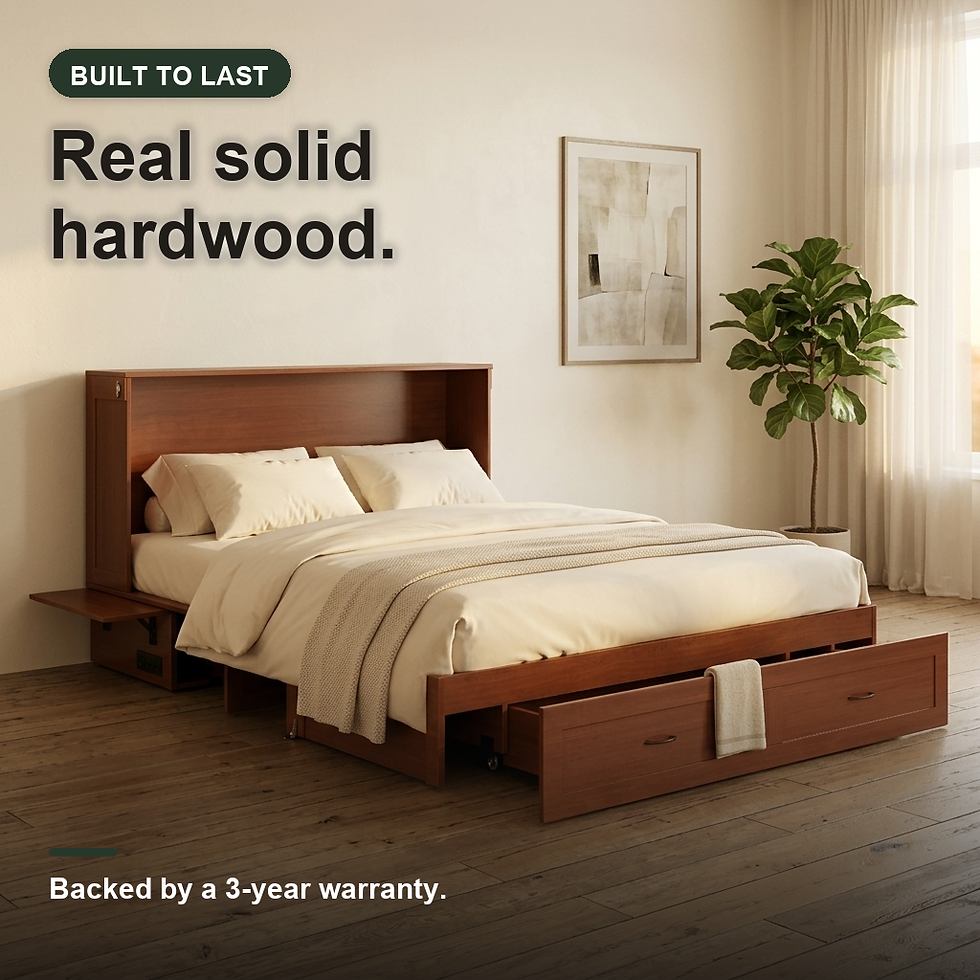
Once the format is settled, finish and scale do the styling work. In a small room, a lighter finish keeps the piece from reading as a heavy block, while a warm wood tone adds the grounding weight a minimalist space often needs. A queen sleeping surface is the sweet spot for guest comfort without dominating the room, which is why a piece like the Olivia cabinet bed works so well as a specification default. It is a genuine queen with the mattress included, built from hardwood, and it holds up to 500 pounds, so you are not sacrificing real sleep quality for the disappearing act. Because it closes down to a console, you can style the top with lamps, books, and art exactly as you would a credenza, and the room never betrays its second life.
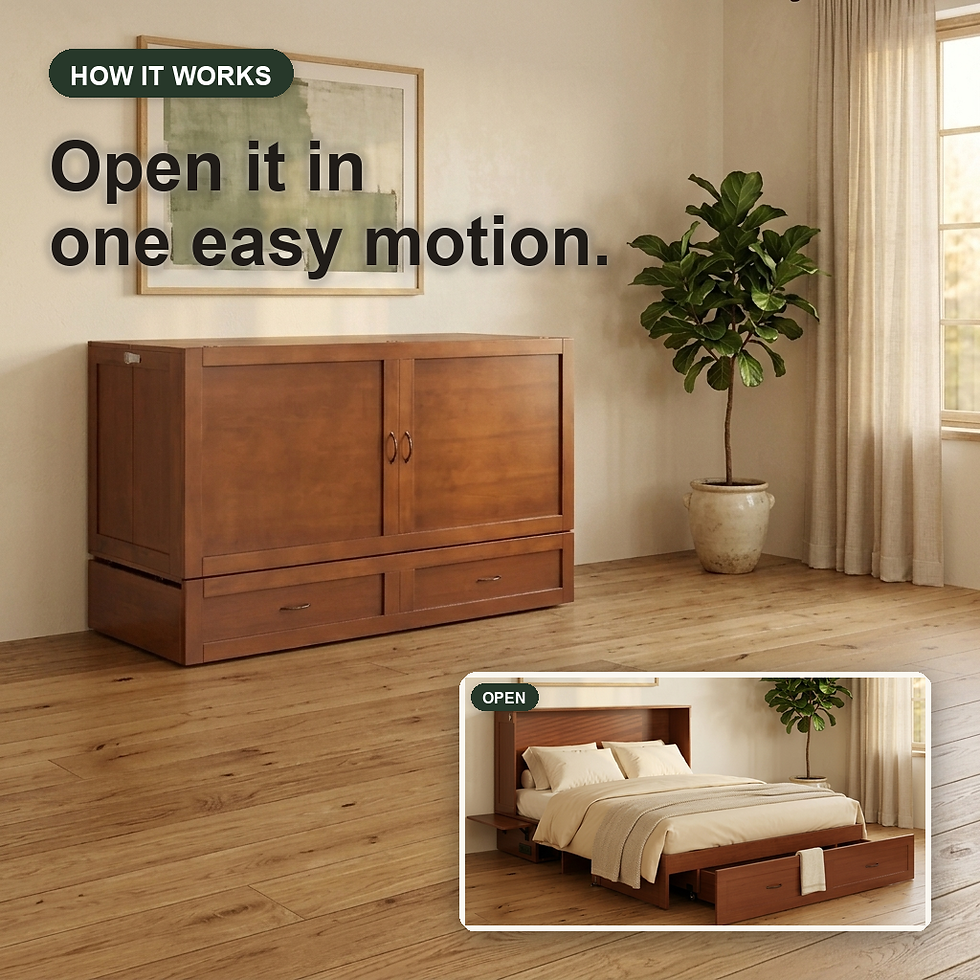
A crisp white finish suits a coastal or contemporary scheme and helps a small room feel airy, while a deeper wood tone anchors a transitional or heritage space. Because the console reads as intentional cabinetry rather than a hidden bed, it sits comfortably in a living room, a home office, or a nursery-to-guest-room that will evolve as the household does.

Staging show homes: sell the room twice
For show homes and model suites, a transforming bed is a storytelling device. Stage the room closed as an office or lounge for the first impression, then invite the walk-through to watch it open. Letting a prospective buyer see a polished den become a guest room in under a minute does something a floor plan never can. It makes the flexibility tangible. Because the console setup takes roughly 30 seconds and needs no tools, your on-site team can demonstrate it live during every showing without a production. The piece sells the square footage twice, and buyers remember it.
A quick note on quality and buyer confidence
Specifying transforming furniture only works if the mechanism feels reassuring, so it helps to work with a supplier who stands behind the piece. When I point clients to Forward Furniture, part of the appeal is the backing around the purchase: 0% financing options, a 90-day trial, and a 3-year warranty, which together take the risk out of a piece most buyers have never owned before. Shipping is a flat $149.99, so budgeting stays predictable for both stagers and homeowners. The flagship queen cabinet bed with mattress sits around $2,099.99, which lands neatly within most mid-range furnishing budgets.
Frequently asked questions
Is a cabinet bed comfortable enough for regular guests? Yes. A quality cabinet bed uses a real queen mattress rather than a thin fold-out pad, so guests sleep on a proper surface. The Olivia includes its mattress and is rated to 500 pounds.
Do I have to attach a cabinet bed to the wall? No. Cabinet beds are freestanding and require no wall mounting or drilling, which is what makes them ideal for renters and for rooms you may want to rearrange later.
Which should I specify for a permanent guest room? If the room is dedicated and owned, a wall bed gives that built-in architectural look. If you want flexibility, a media-unit footprint, and no installation, choose a cabinet bed.
The takeaway
Small-home design in the Okanagan is really about giving one room two honest identities. The furniture that pulls that off, whether a wall-mounted unit for a committed space or a freestanding console for a flexible one, lets a home live larger than its floor plan. Specify the transformation, stage it live, and let the room do the selling.
Comments